
Blogs
Acne Scars: Which Treatment Actually Works for Which Type of Scar?
If you have acne scars, you’ve probably come across dozens of treatments promising smoother skin — lasers, microneedling, chemical peels, PRP, subcision and more.
But there is one important thing I tell my patients:
There is no single “best treatment for acne scars.
The right treatment depends on the type of scar you have.
In fact, most people have more than one type of acne scar, which is why simply doing repeated sessions of the same procedure may not give the improvement you expect.
Let’s understand acne scars a little better.
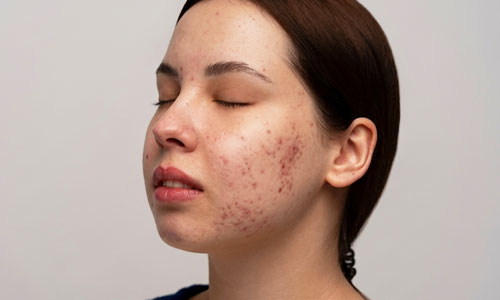
First: Acne Marks and Acne Scars Are Not the Same
This is one of the most common misconceptions I see in clinical practice.
The brown or red marks left behind after acne are usually post-inflammatory pigmentation or redness. These are changes in colour and may gradually improve with appropriate skincare, sun protection and treatments.
A true acne scar, however, represents a change in the texture or structure of the skin.
If there is a depression, indentation, uneven texture or raised area, we are dealing with scarring rather than simply pigmentation.
And the treatment is very different.
The Main Types of Acne Scars
1. Ice-Pick Scars
These are small but deep scars that look almost as though the skin has been punctured with a sharp object.
Because they extend relatively deep into the skin, superficial treatments alone may not adequately address them.
Depending on the scar, treatments may include:
- TCA CROSS
- Punch techniques in selected scars
- Fractional resurfacing procedures
- Combination treatments
The key is to treat the depth of the scar, rather than simply resurfacing the skin repeatedly.
2. Boxcar Scars
Boxcar scars are broader depressions with relatively defined edges.
They may be shallow or deep, and this distinction matters when choosing treatment.
Options can include:
- Fractional laser resurfacing
- Microneedling
- RF microneedling
- Subcision in selected scars
- Punch elevation or other surgical techniques for deeper scars
A shallow boxcar scar may respond very differently from a deep one, even though both are called “boxcar scars.”
3. Rolling Scars
Rolling scars create a wavy or undulating appearance to the skin.
Often, the problem isn’t only at the surface.
Fibrous bands underneath the skin can tether it downwards, creating the depression.
In such cases, repeatedly treating only the surface may give disappointing results.
Subcision can be particularly useful because it helps release these underlying attachments.
It may subsequently be combined with treatments such as:
- Microneedling
- RF microneedling
- Fractional lasers
- Biostimulatory or regenerative treatments in selected cases
4. Raised or Keloid Scars
Not every acne scar is depressed.
Some patients develop thick, firm or raised scars, particularly over areas such as the jawline, chest, shoulders and back.
These require a completely different approach.
Treatment may include intralesional medications, lasers and other scar-modulating therapies depending on the individual case.
Trying to treat a raised scar in the same way as a depressed acne scar can actually be counterproductive.
So, Is Laser the Best Treatment for Acne Scars?
Not necessarily.
Lasers are extremely useful tools in acne-scar management, but “laser” is not a diagnosis or a treatment plan.
Different lasers work at different depths and target different components of a scar.
More importantly, if a scar is tethered underneath the skin, resurfacing the top without addressing that tethering may not produce the desired correction.
Similarly, very deep ice-pick scars may need targeted treatment before overall resurfacing.
This is why I prefer to think of acne-scar treatment as scar-specific treatment rather than machine-specific treatment.
Why Combination Treatments Often Work Better
Most patients don’t walk into the clinic with only one perfectly defined scar type.
You may have:
- Ice-pick scars on one area
- Rolling scars on another
- Boxcar scars elsewhere
- Pigmentation along with all of them
Treating the entire face with one procedure simply because it is the latest or most popular treatment doesn’t always make sense.
A dermatologist may therefore create a staged treatment plan — addressing different scars with different techniques over several sessions.
This is sometimes called a multimodal approach to acne-scar treatment.
How Many Sessions Will I Need?
There is no universal number.
It depends on:
- Type of scars
- Depth and severity
- Skin type
- Treatments being performed
- Healing response
- Presence of active acne
- Pigmentation tendency
- Your expected degree of improvement
Be cautious of promises such as “100% scar removal” or a guaranteed result within a fixed number of sessions.
The realistic goal of acne-scar treatment is usually significant improvement in texture and appearance, rather than making every scar disappear completely.
Should Active Acne Be Treated First?
In most cases, yes.
If you are continuing to develop significant acne while undergoing scar procedures, new scars can continue to form.
Controlling active acne is therefore an important part of a long-term scar-management plan.
This is also why acne treatment should ideally begin early in patients who are starting to scar.
What About PRP, PDRN and Exosomes?
Regenerative treatments are increasingly discussed in aesthetic dermatology.
Depending on the treatment and individual patient, some may be used as adjuncts alongside procedures aimed at skin remodelling and healing.
However, they should not distract from the fundamental principle of acne-scar treatment:
First identify what is structurally causing the scar. Then choose the procedure that addresses it.
No injectable, serum or trending regenerative treatment replaces proper scar assessment.
Can Acne Scars Be Completely Removed?
This is perhaps the most important expectation to discuss.
Acne scars can often be improved considerably, but completely restoring scarred skin to exactly how it looked before acne may not always be possible.
Good acne-scar treatment is therefore not about chasing perfection.
It is about achieving meaningful improvement while balancing effectiveness, downtime, pigmentation risk, safety and your individual skin type.
The Takeaway
If you have already undergone multiple sessions of “acne scar treatment” without much improvement, it doesn’t necessarily mean your scars cannot improve.
Sometimes the question that needs to be asked is:
Were we treating the right scar with the right technique?
Before deciding between a laser, peel, microneedling or any other procedure, your scars should first be assessed according to their type, depth and underlying structure.
Because when it comes to acne scars, the treatment should follow the scar — not the trend.
Frequently Asked Questions
Which treatment is best for acne scars?
There is no single best treatment. The ideal treatment depends on whether the scars are ice-pick, boxcar, rolling, raised or a combination of different types.
Is laser treatment effective for acne scars?
Fractional laser treatments can improve certain acne scars, but lasers may need to be combined with procedures such as subcision or targeted scar treatments depending on scar morphology.
Is microneedling good for acne scars?
Microneedling can help improve selected atrophic acne scars and overall texture. Deeper or tethered scars may require additional procedures.
How long does acne-scar treatment take?
Scar remodelling happens gradually. Most treatment plans involve multiple sessions spaced over several months, although the exact schedule varies between patients.
Can old acne scars still be treated?
Yes. Even scars that have been present for years may be amenable to treatment. The treatment chosen depends more on the characteristics of the scar than simply its age.
Medical Disclaimer:
This article is intended for general educational purposes and should not be considered a substitute for an individual medical consultation. Acne-scar treatment needs to be customised according to scar type, skin type, medical history and clinical examination.